Introduction: Moving Beyond Marks
For decades, Indian education has been dominated by marks and grades. These conventional report cards provide a limited view of learning, ignoring creativity, collaboration, and emotional well-being. The National Education Policy (NEP) 2020 responds with the Holistic Progress Card (HPC)—a multidimensional, 360° student report that nurtures whole-child development (Official NEP 2020 Document).
What is a Holistic Progress Card (HPC)?
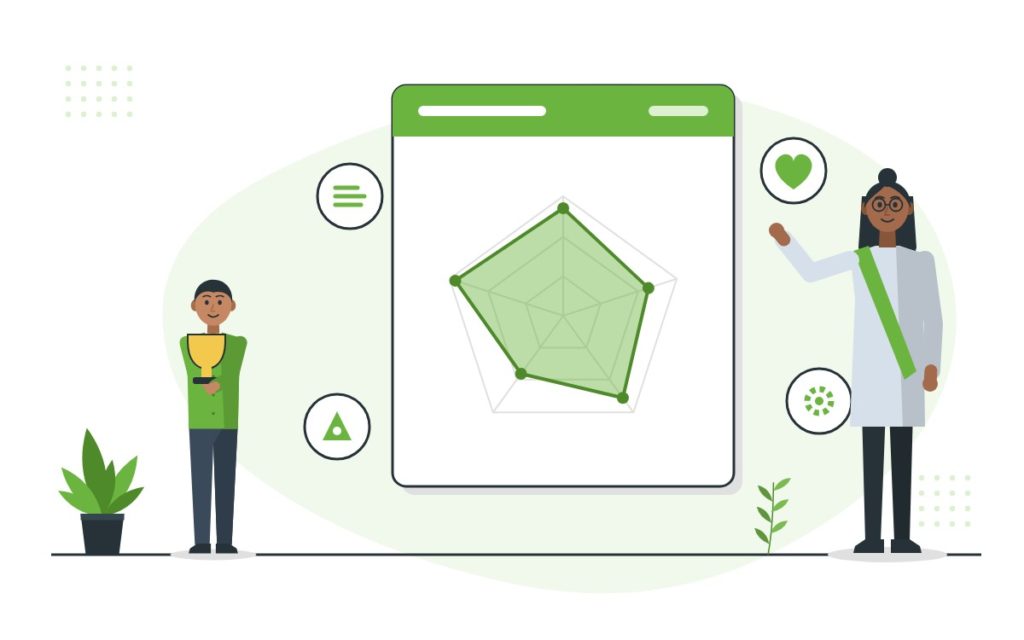
An HPC is a student-centric assessment tool designed by NCERT/PARAKH (PARAKH NCERT). It expands evaluation beyond academics to include socio-emotional skills, creativity, values, and physical development. Feedback comes from teachers, parents, peers, and the students themselves, ensuring inclusivity and accuracy.
Key Features of Holistic Progress Cards
- 360-Degree Evaluation: Combines teacher, self, peer, and parent assessments (CBSE HPC Guide).
- Multi-Domain Indicators: Academic performance, life skills, creativity, co-curriculars, values, health, and fitness.
- Competency-Based & Formative: Continuous observation rather than one-off exams.
- Descriptive Feedback: Actionable narratives instead of raw scores.
- Evidence-Based: Anchored in portfolios, projects, anecdotal records, event sampling, and real-life tasks.
- Digital & Eco-Friendly: Paperless, sustainable formats integrated with school ERPs.
Why This Shift Was Needed
- Rote Learning & Exam Pressure: HPCs reduce dependence on memorization.
- 21st-Century Skills: Critical thinking, collaboration, creativity, and emotional resilience are emphasized.
- Equity & Personalization: Every child’s strengths are recognized.
- Parent Partnership: Parents gain deeper insights to support learning (Holistic Progress Card Portal).
Traditional Marksheets vs. Holistic Progress Cards
| Aspect | Traditional Marksheets | Holistic Progress Card (NEP 2020) |
|---|---|---|
| Focus | Marks & grades only | Academic + Social + Emotional + Physical |
| Evidence | Exams & tests | Portfolios, projects, task-based assessments |
| Feedback | Numeric scores | Descriptive narratives & rubrics |
| Evaluators | Teacher only | Teacher + Student + Peer + Parent |
| Purpose | Ranking students | Guiding growth & skills development |
| Format | Paper report | Digital, eco-friendly, ERP-enabled |
Implementation in Schools
HPCs are rolled out in line with NEP’s four-stage structure:
- Foundational (Grades 1–2): Play-based, aligned with NIPUN Bharat for early literacy & numeracy (NIPUN Bharat Guidelines).
- Preparatory (Grades 3–5): Focus on teamwork, problem-solving, and creativity.
- Middle (Grades 6–8): Competency rubrics, project-based learning, collaborative tasks.
- Secondary (Grades 9–12): Career readiness, higher-order thinking, portfolios, and self-assessments.
Practical Tools Schools Can Use
- Portfolios of student work.
- Peer & Self-Evaluation Sheets.
- Role Plays & Task-Based Assessments.
- Anecdotal Records & Event Sampling.
- Parent Feedback Forms.
Example: Maharashtra SCERT introduced Holistic Progress Cards for Class 1 from 2025, integrating academics, social skills, and life competencies (Times of India Coverage).
Where the HPC Stands Today
PARAKH has now published stage-wise Holistic Progress Card frameworks covering all four stages of school education — Foundational, Preparatory, Middle and Secondary — with the Secondary stage card extending to Classes 9 to 12 and giving weight to life skills such as time management and financial literacy. A Digital HPC has also been made available by PARAKH (PARAKH, NCERT).
For schools, this changes the nature of the question. The HPC is no longer a policy direction to prepare for at some future date — the stage-wise templates exist and are published. What schools are actually working out now is operational: how to capture evidence across a full year, from several observers, without adding hours to a class teacher’s week.
Role of Technology & ERP Platforms
Manual adoption of HPCs is resource-intensive. Digital platforms make them scalable:
- Preloaded Templates: Ready-to-use, stage-specific formats.
- Analytics Dashboards: Competency trends, growth curves, and heat maps.
- Multi-Rater Inputs: Structured channels for teacher, student, peer, and parent.
- Eco-Friendly Reports: Paperless delivery supporting sustainability.
- Compliance Tools: Alignment with NEP 2020 and NIPUN Bharat.
Vawsum’s Marksheet module generates NEP-aligned holistic progress cards alongside standard marksheets and CBSE and ICSE templates. Because it sits inside the wider school management software, the records an HPC draws on — attendance, assessments, co-curricular participation — are already held in one place rather than assembled from separate files at the end of a term.
If you are evaluating systems on this basis, our selection framework for CBSE schools covers what to ask any vendor about report cards, NEP formats and UDISE+ readiness.
Benefits of Holistic Progress Cards
Students: Recognition beyond academics, stronger motivation through acknowledgment of creativity, leadership, and social skills. Reduced exam stress and increased self-confidence due to constructive feedback.
Teachers: Richer insights into student growth across domains, enabling personalized instruction and differentiated teaching. HPCs also support professional reflection, helping teachers align classroom practices with 21st‑century skills (CBSE Teacher Guide).
Parents: A transparent and comprehensive view of overall development. Parents receive actionable suggestions to support learning at home, understand a child’s strengths, and engage more effectively with teachers.
Schools: Alignment with NEP 2020 and NIPUN Bharat ensures policy compliance. HPCs enhance reputation as progressive institutions, foster trust among parents, and provide data-driven insights for curriculum planning, teacher training, and continuous improvement.
Challenges & the Way Forward
- Teacher Training: Shifting from scores to descriptive evidence.
- Standardization: Ensuring consistent evaluation across schools.
- Parent Awareness: Helping parents read and value HPCs.
- Data Management: Avoiding overload through ERPs.
Way forward: professional development, template standardization, digital workflows, and community sensitization (NCERT HPC Concept Note).
Conclusion: A New Era of Assessment
The Holistic Progress Card is not just compliance—it’s a mindset shift toward nurturing whole learners. With NEP 2020, PARAKH frameworks, and ERP-enabled digital tools, Indian schools can deliver 360° evaluations that prepare students for real-world success.
Education is more than marks—it’s about unlocking every child’s true potential.
FAQ
What is a Holistic Progress Card under NEP 2020?
A Holistic Progress Card is a multidimensional, 360° evaluation record assessing academics alongside life skills, values, creativity and physical development, developed under the PARAKH framework at NCERT. Feedback is gathered from teachers, parents, peers and the student rather than from examinations alone.
How is a Holistic Progress Card different from a marksheet?
A marksheet records scores from examinations, assessed by the teacher, for the purpose of ranking. A Holistic Progress Card records evidence gathered through the year — portfolios, projects and observed tasks — across academic, social, emotional and physical domains, with descriptive feedback rather than numeric scores, and with the student, peers and parents contributing alongside the teacher.
What role does NIPUN Bharat play in the HPC?
At the Foundational stage, covering Grades 1 and 2, the Holistic Progress Card aligns with NIPUN Bharat’s goals for early literacy and numeracy. Assessment at this stage is play-based and observational, so what the card records is evidence of a child progressing toward those foundational outcomes rather than test performance.
How can schools implement HPCs without overwhelming teachers?
By collecting evidence continuously rather than at the end of a term — portfolios of student work, project-based tasks, role plays, anecdotal records and parent feedback forms — and by recording it digitally as it happens. The load on teachers comes less from the framework itself than from reconstructing a year’s observations in the fortnight before report cards are due.
Which classes does the Holistic Progress Card cover?
PARAKH has published stage-wise Holistic Progress Cards across all four stages of school education: Foundational (Grades 1–2), Preparatory (Grades 3–5), Middle (Grades 6–8) and Secondary (Grades 9–12). Each stage has its own indicators appropriate to the age group, so the Foundational card looks quite different from the Secondary one.
Are digital Holistic Progress Cards eco-friendly?
Yes. Digital HPCs remove the printing that a descriptive, multi-page report would otherwise require, reduce administrative effort, and make the record accessible to parents on a phone rather than as a sheet of paper that has to be carried home and kept safe.




Recent Comments