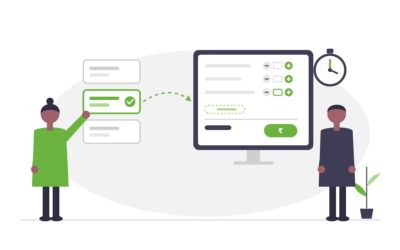
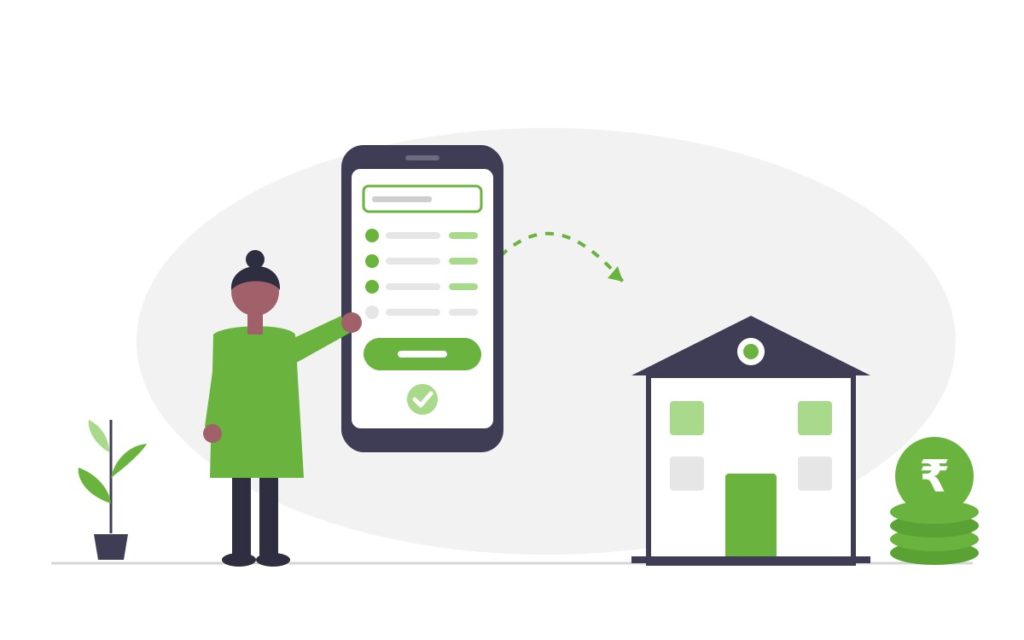
At a glance: A trust-run, English-medium school in South 24 Parganas, on the outskirts of Kolkata, with more than 2,000 students, wanted to stop collecting fees over the counter. It had neither the budget for a full school ERP nor the staff to run one. Vawsum set it up on Quick Fees, the fee module offered on its own, and brought in the school’s national private-sector bank, which agreed to full subvention and waived the payment gateway charges entirely. Parents open a single payment link, enter their child’s admission ID, see exactly what is due and pay by UPI or any other online mode. Within three months, the school’s fee collection was 100% online.
The problem
This is a large school by any measure, more than 2,000 students, but it is run the way many schools on the edges of a city are run: by a trust, with a careful eye on every rupee, and with a small office team that already has more work than hours. Fees came in at the counter. Each collection cycle meant queues of parents, cash to count, receipts to write and registers to total, and the trust relied on the office’s summaries to know where collections stood.
The school knew it wanted fees online. What stood in the way was not willingness but the shape of the options in front of it:
- A full ERP was more than it needed and more than it could fund. Most routes to online fee collection begin with buying an entire school management system, and with it a migration, training and an annual cost sized for every module, not just fees.
- There was no one spare to run new software. Teacher and staff budgets were already tight. Any solution that needed a dedicated operator, or a data-entry effort to get going, was effectively ruled out.
- Payment gateway charges were a real concern. For a trust-run school collecting fees from 2,000+ families, a per-transaction charge on every payment adds up to a meaningful sum over a year, a cost the school would either have to absorb or pass on to parents.
So the brief was unusually specific: online fee collection, with nothing to install for parents, nothing new for the office to operate, no ERP commitment, and ideally no transaction cost.
From the fee counter to a single payment link
Online fee collection without an ERP, without new staff and without gateway charges
The smallest possible change, with the bank carrying the cost
What changed
Rather than sell the school a bigger system than it needed, Vawsum started from the narrowest thing that would solve the problem: fee collection, and nothing else.
- Quick Fees instead of a full ERP. Quick Fees is the Vawsum fee module offered on its own, running on the same collection rails as the complete Fee Management System. The school got online collection, automatic receipts and the full reporting set without committing to admissions, attendance, examinations or anything else it was not ready for.
- The bank brought in as a partner, not just a processor. Vawsum approached the school’s bank, a national private-sector bank, on the school’s behalf. The bank agreed to 100% subvention on the payment gateway, waiving the charges entirely. That removed the one recurring cost that would otherwise have attached itself to every single payment.
- One URL for every parent. Instead of an app to download or a login to remember, the school was given a single payment link to share with parents. A parent opens it, enters the child’s admission ID, and immediately sees the fee position: what is due, what has been paid and what is outstanding. They pay right there, by UPI or any other online mode the gateway supports, and the receipt is generated automatically.
- Nothing new for the office to run. Collections post into the system on their own, so there was no new data-entry role to create and no one to hire. The office team’s work went down, not up.
- Consolidated reports for the trust. The school now gets consolidated collection reports, covering what has come in and what is still outstanding, from the same system the payments flow through, rather than from registers totalled by hand.
The school did not force anyone online. In the early weeks, some parents still preferred to come to the school and pay as they always had. The link simply sat alongside the counter as the easier option.
The result
Parents took to it quickly. Within three months, the school’s fee collection had moved to 100% online, without a mandate, without closing the counter by decree, and without a single new hire. Once paying took a minute on a phone, the queue stopped being worth joining.
For a school run by a trust, the bigger change was what it meant for oversight. Every payment now travels from a parent’s account to the school’s account through the bank, with a system-generated receipt and a matching record. There is no cash in transit, no register to reconcile and no figure that depends on someone’s summary. The trust can see collections as they happen, and the audit trail exists by default, because there is no longer any other way for fees to arrive. The trust valued that transparency as much as the convenience.
The school’s experience after going live has been strongly positive, and it achieved all of this without the cost or upheaval of an ERP migration. Because its fee history already sits in Vawsum, adding modules later would be a continuation rather than a fresh start, should the school ever want to.
It is worth setting this alongside how a Burdwan school made every rupee traceable. That school kept cash, POS and online collection running side by side and built controls around each channel. This school took the other route to the same destination: it made online payment so easy and so cheap that the other channels simply emptied out.
FAQs
Can a school collect fees online without buying a full school ERP?
Yes. That is exactly what Quick Fees is for. It is Vawsum’s fee module offered on its own, so a school can start online fee collection without changing anything else it runs. Schools that already use another ERP can keep it.
Who paid the payment gateway charges in this case?
No one. The school’s bank, a national private-sector bank, agreed to 100% subvention and waived the payment gateway charges entirely. Whether a bank will offer this depends on the school’s banking relationship, and Vawsum can approach the bank on the school’s behalf.
What does a parent actually have to do to pay?
Open the school’s payment link, enter the child’s admission ID, check the fee position on screen and pay by UPI or another online mode. There is no app to install and no password to remember, and the receipt is generated automatically.
Does the school need extra staff to run online fee collection?
No. This school added no one. Online payments post into the system automatically, receipts are generated without anyone writing them, and the reports are produced from the same data, so the office has less to do, not more.
Do parents who prefer to pay at school get left out?
No. Nothing was switched off on day one. Some parents kept coming to the school at first; the move to 100% online happened on its own within three months as families found the link easier.
How does going fully online help with audit and transparency?
When every fee payment goes through the bank, each one carries a transaction record and a system-generated receipt, and there is no cash to count or carry. For a trust-run school, that means collections can be checked directly against bank records instead of relying on manual registers.
Running a school in Kolkata or anywhere in West Bengal and want to see whether the same route works for you? Look at how Vawsum pricing works or send us an enquiry.
See related case studies: how a Kolkata school cut counter billing to a few clicks with editable sales voucher templates, how a CBSE school in South 24 Parganas ran class-wise admission kits from purchase to dispatch with item-level profitability, how a fine arts college in North 24 Parganas made every payment wait for in-system approval, with budget flags at the approval step, how a 1,000+ student Burdwan school replaced cash and screenshot-based collection with an auditor-ready fee system, how a CBSE school in Siliguri fixed chronic late fee payment by linking admit card downloads to a fee-clearance cutoff, how a Bengali-medium school with zero computers went digital using nothing but phones, how one 8-branch school group cut its payroll cycle from a week to under a day, how a residential school in Siliguri turned leave policy into a configurable rules engine, how a reputed ICSE school ran 1,000+ annual admissions through one auditable pipeline, how a Kolkata residential school made hostel attendance verifiable with four daily checkpoints, how a multi-branch Kolkata school tracked transport with QR codes alone, how a Jalpaiguri school rebuilt its annual ID card renewal in two days, and how a school with 100+ teachers replaced its daily substitute scramble with rule-based, auditable allocation.





Recent Comments